Shreyas G. Chandhavar
Shreyas G. ChandhavarMechanical Engineer · Product Development · Aero-Structural Analysis
Mechanical Design · Aero-Structures · CFD · Engineering Computation

Design.Analyze.Validate.

Mechanical engineer with professional product-development experience and an MSc in Sustainable Energy Engineering from Lund University. I work from requirements and first-principles calculations through CAD, simulation, controls-oriented modelling, manufacturing considerations and engineering verification.

Featured aerospace systems study01 / 07
HART-120 reduced-order aero-structural design trade
HART-120 technology system mass breakdownHART-120 mission fuel comparisonHART-120 final robustness closure
−8.36%Induced drag
−2.01%3000-km cruise fuel
98%Joint GLA robustness
SolidWorks · NX · InventorMechanical design & CAD
OpenFOAM · ANSYS · ParaViewCFD & simulation
MATLAB · Python · MLEngineering computation & optimization
GD&T · DFM/DFAProduction-minded design
Selected engineering work

Proof, not a skill list.

Each project is framed as an engineering decision trail: requirements, assumptions, model, verification, result and limitations.

HART-120 aero-structural design tradeAero-structural trade
HART-120 GLA MLA system mass breakdownSystem mass
HART-120 mission fuel comparisonMission fuel
HART-120 robustness closureRobustness
01 · AEROSPACE / AEROELASTICITY / LOAD ALLEVIATION

HART-120 Flexible High-Aspect-Ratio Wing

Original fictional transport-wing study built around a real aerospace systems problem: higher aspect ratio reduces induced drag but increases structural mass, flexibility and gust/maneuver loads. I coupled reduced-order aerodynamics, beam/wingbox sizing, passive aeroelastic redistribution, active load alleviation, fail-safe sizing, mission analysis, ML surrogates and Monte Carlo robustness verification.

PythonAeroelasticityGust Load AlleviationWingbox sizingMachine LearningMonte Carlo
−8.36%Induced drag
−2.01%3000-km cruise fuel
98%Joint robustness

Engineering conclusion: the final AR 15.5 concept closes the project-level structural, mission and robustness gates only after fail-safe structure, technology-system mass and uncertainty are included. ML accelerates screening; finalists are returned to the transient physics model for verification.

Open complete HART-120 case study →
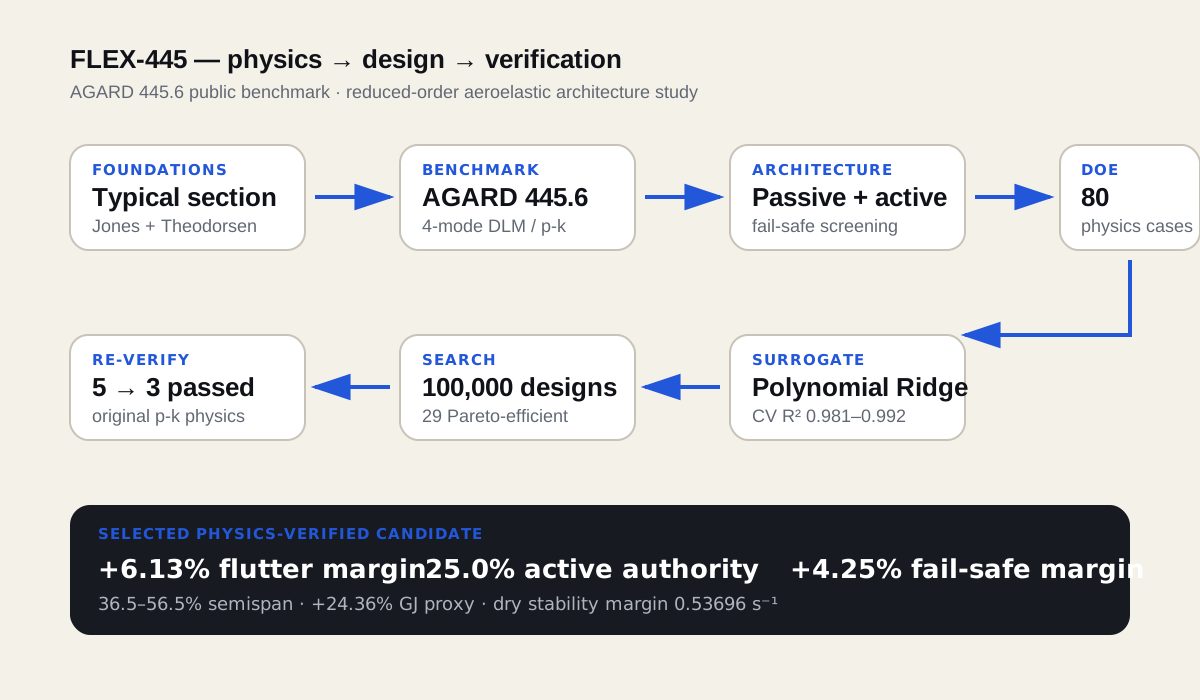
FLEX-445 physics-guided hybrid aeroelastic workflow
02 · AEROSPACE / AEROELASTICITY / FLUTTER CONTROL

FLEX-445 Hybrid Flutter Mitigation

Public-benchmark aeroelastic design study based on AGARD 445.6. I built a four-mode DLM/p-k model, validated it against published flutter data, investigated passive torsional tailoring and finite-bandwidth/delay active control, then used physics-generated ML surrogates to screen 100,000 hybrid architectures before returning shortlisted designs to the original solver.

PythonAeroelasticityDLM / p-kActive ControlMachine LearningSiemens NX
+6.13%Selected flutter margin
25.0%Active-only authority required
+4.25%Controller-off margin

Engineering conclusion: within the reduced-order design space, the physics-verified minimum-authority hybrid candidate met the flutter and fail-safe targets with roughly one-quarter of the robust active-only authority. Five ML candidates were re-run through the physics model; only three passed every final requirement.

Open complete FLEX-445 case study →
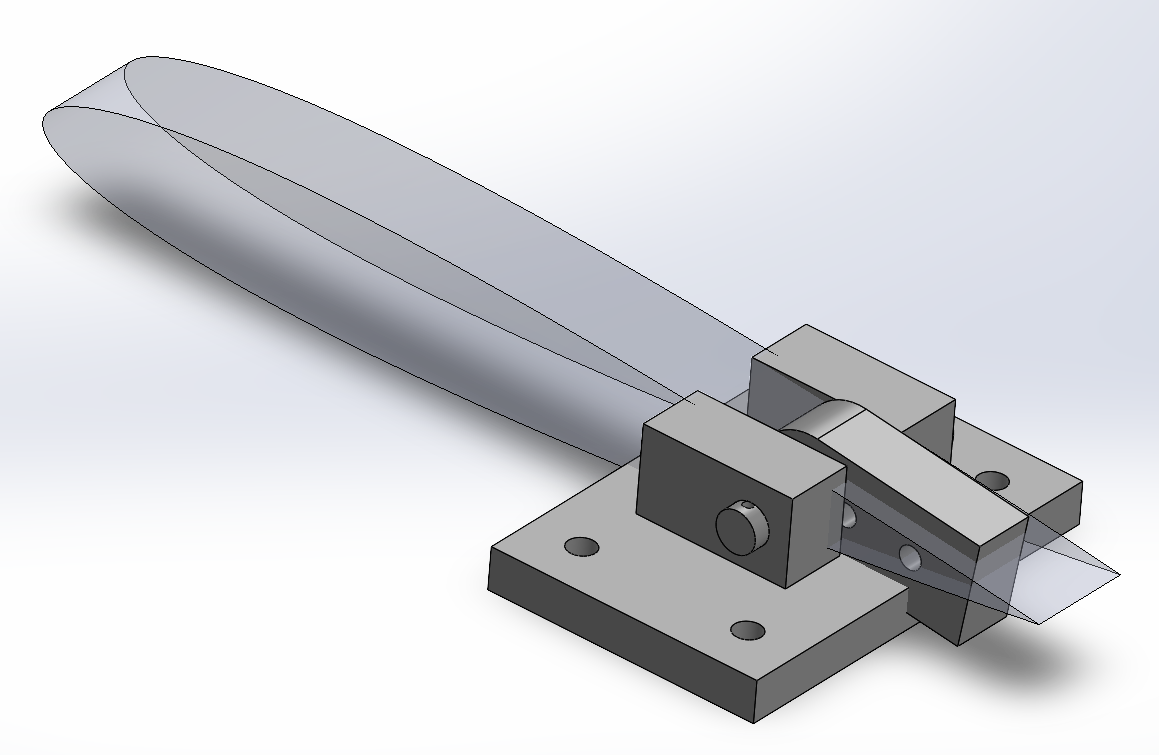
NACA0012 control-surface hinge context assembly in SolidWorks
03 · AEROSPACE / MECHANICAL DESIGN / FEA

NACA0012 Control-Surface Hinge

Control-surface hinge design study linking a public NACA0012 reference section to MATLAB load screening and analytical sizing, SolidWorks CAD, local contact FEA and analytical-to-FEA correlation. The hinge is placed at 75% chord and sized around a 322.33 N design reaction.

SolidWorksMATLABFEANACA0012Mechanical DesignContact Analysis
35.73 MPaFEA local peak stress
0.3716 mmMaximum displacement
14.08Minimum FEA FoS

Engineering conclusion: the local FEA peak is 1.65× the nominal analytical pin stress because the finite-element model resolves contact, bearing and geometric stress concentration that the hand calculation intentionally smooths out.

Open complete NACA0012 hinge case study →
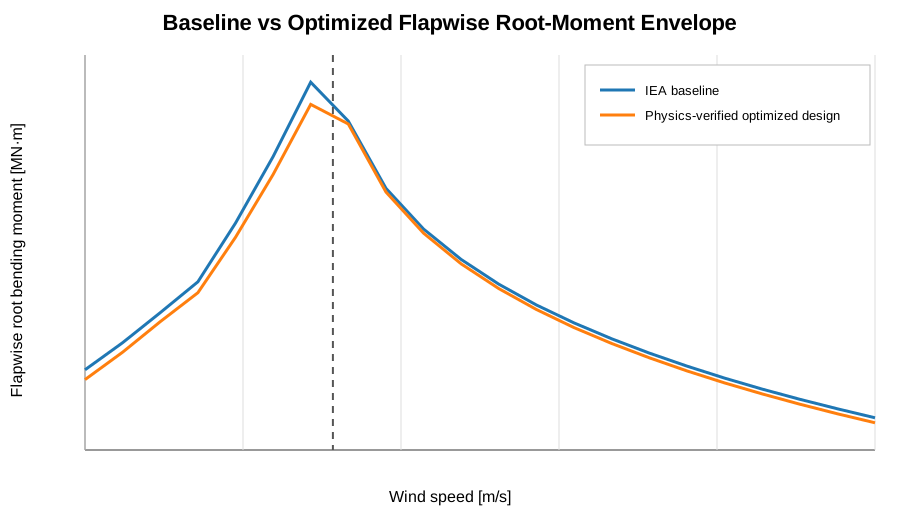
AeroStruct-15MW baseline versus optimized flapwise root-moment envelope
04 · OFFSHORE WIND / AERO-STRUCTURAL OPTIMIZATION

AeroStruct-15MW

Independent reduced-order study built around the public IEA 15-MW reference turbine. I developed and validated a BEM aerodynamic model, coupled it to rotating-beam structural analysis, generated a physics design database, trained ML surrogates, searched 100,000 candidate designs and re-verified the Pareto-selected solutions with the physics model.

PythonBEMRotating-beam FEMMachine LearningPareto optimizationIEA 15-MW
−5.65%Rated root moment
−7.23%Rated rotating tip deflection
−0.078%Aerodynamic AEP proxy

Engineering conclusion: within the bounded reduced-order design space, the optimum moved toward smooth outboard aerodynamic load redistribution rather than additional structural material. Results are physics-verified within the model assumptions, not IEC/OpenFAST certification claims.

Open complete technical repository →
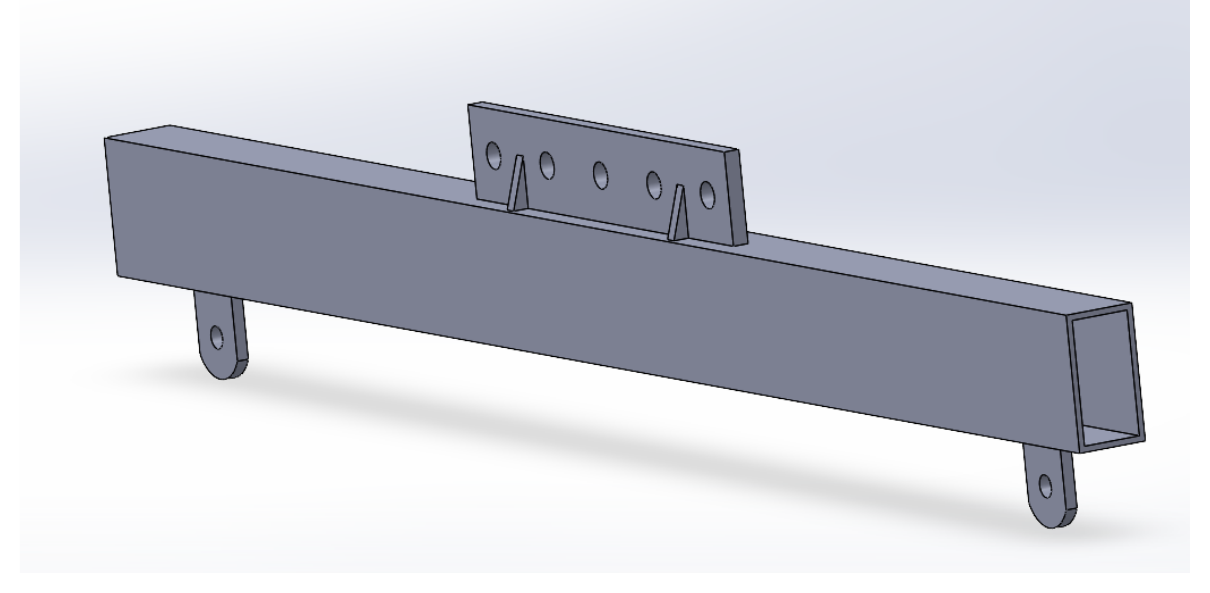
Adjustable lifting fixture CAD assembly
05 · MECHANICAL DESIGN / STRUCTURES

Adjustable Lifting Fixture

End-to-end concept design for a 300 kg eccentric load. Reactions, beam sizing, pin/lug failure modes and connection geometry were calculated before CAD, followed by a preliminary SolidWorks static FEA.

SolidWorksMATLAB / OctaveFEAS355Load path
95.6 MPaNominal beam stress
1.265 mmAnalytical deflection
3 candidatesRHS sections screened
Open technical repository →
06 · CFD / WIND-ASSISTED PROPULSION

Multi-Element WingSail CFD

MSc thesis study of a NACA 0018-based rigid wingsail with hinged-flap and gap configurations. The OpenFOAM workflow examined flap deflection, hinge position, gap size and operating orientation, including thrust and side-force decomposition.

OpenFOAMParaViewSST k-ω2D steady RANSAerodynamics
NACA 0018Baseline airfoil
Validation firstPublished-data comparison
Thrust ≠ max liftKey propulsion finding
Open thesis companion →
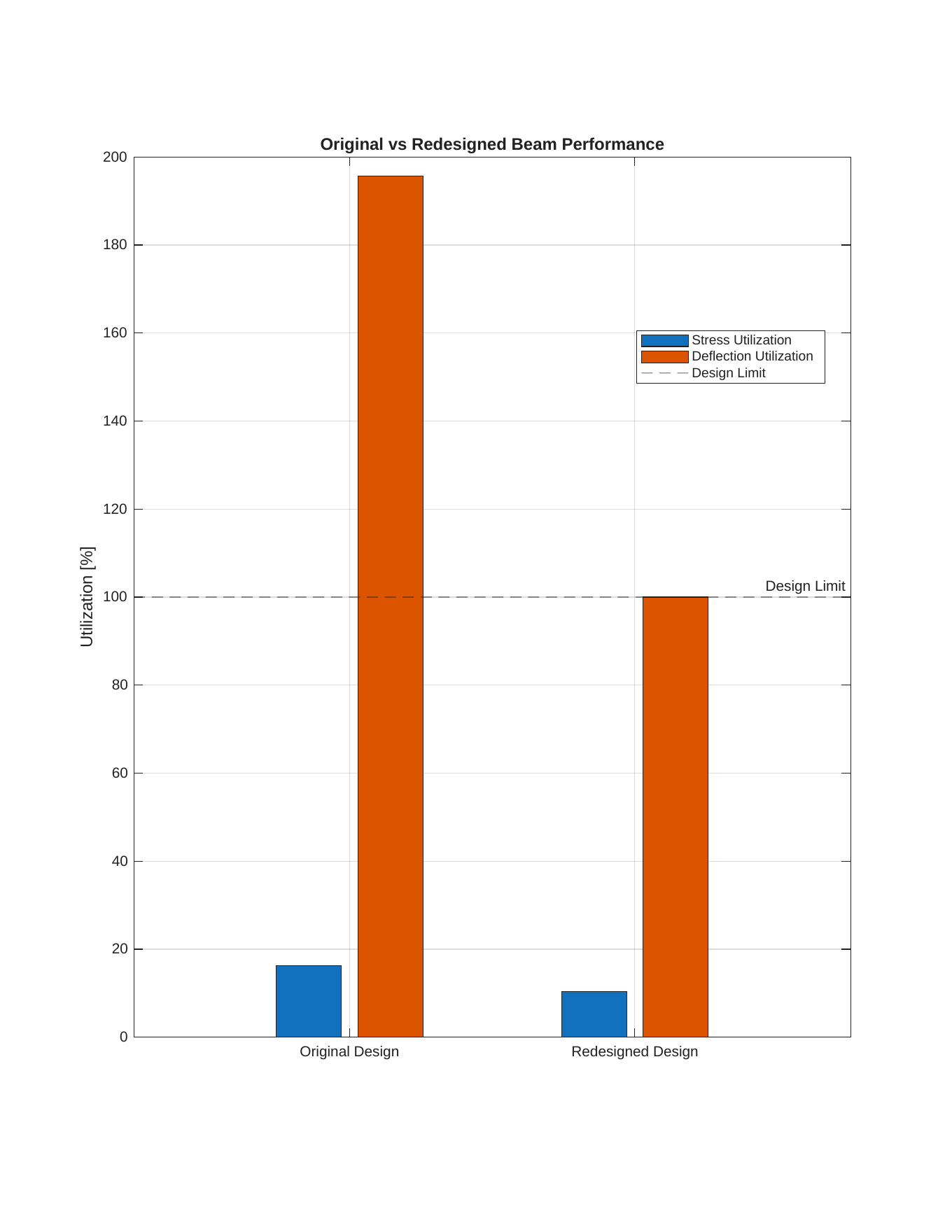
Original versus redesigned beam performance plot
07 · MATLAB / STRUCTURAL SIZING

Cantilever Beam Design Analyzer

A structural analysis tool that separates strength from serviceability, calculates allowable loads, analytically resizes the section and checks the redesign with a 50-point parametric study.

MATLABBeam theoryParametric studyDesign sizing
6.13Initial yield FoS
9.78 mmInitial tip deflection
125.07 mmRequired height
Open MATLAB repository →
Engineering capabilities

From requirements to evidence.

I work across the chain rather than treating CAD, simulation, controls and computation as isolated software skills.

⌖

Mechanical Design

3D parts and assemblies, engineering drawings, GD&T, tolerance reasoning, DFM/DFA and load-path driven geometry.

∿

CFD & Aerodynamics

RANS modelling, meshing, convergence assessment, aerodynamic forces, aero-structural trade studies and engineering interpretation.

∑

Engineering Computation

MATLAB and Python tools for structural calculations, design-space exploration, surrogate modelling, uncertainty analysis and optimization.

△

Verification

Analytical checks, preliminary FEA, physics-model validation, surrogate cross-validation and explicit documentation of assumptions and limitations.

Experience & education
DEC 2022 — JUL 2024

Design Engineer · Mac Precitec India

Developed and released customer-specific precision cutting tools, boring bars, spindle adapters, interfaces and assemblies from requirements and feasibility through CAD release and production support.

50+ designs released15–25% cycle-time reduction on selected componentsGD&TDFM/DFAProduction support
MSc · 2024 — 2026

Lund University · Sustainable Energy Engineering

Master’s thesis: CFD Investigation of Multi-element Airfoils in Wingsails. OpenFOAM study of NACA 0018-based hinged-flap and gap configurations for wind-assisted ship propulsion.

CFDOpenFOAMWind energyHeat transferEnergy systems
BEng · 2018 — 2022

Mechanical Engineering

Foundation in machine design, manufacturing, thermodynamics, fluid mechanics, heat transfer and turbomachinery.

Portrait of Shreyas G. Chandhavar
About me

I like engineering decisions that can be defended.

I’m a mechanical engineer with industry experience in precision tooling and product development, and an MSc in Sustainable Energy Engineering from Lund University. My work spans mechanical design, manufacturing-oriented CAD, CFD, structural analysis, aero-structural modelling and engineering computation.

What connects those areas is the way I work: define the requirement, understand the load or physics, build the model, verify the result, and document what the model can—and cannot—claim. This portfolio is the evidence layer behind my résumé.

Design EngineerProfessional product-development experience
MSc · Lund UniversitySustainable Energy Engineering
Engineering focusMechanical design · aero-structures · CFD · energy systems
Connect

See the work behind the résumé.

The repositories and case-study pages contain the calculations, assumptions, CAD evidence, simulation outputs and engineering notes behind the projects shown here.